

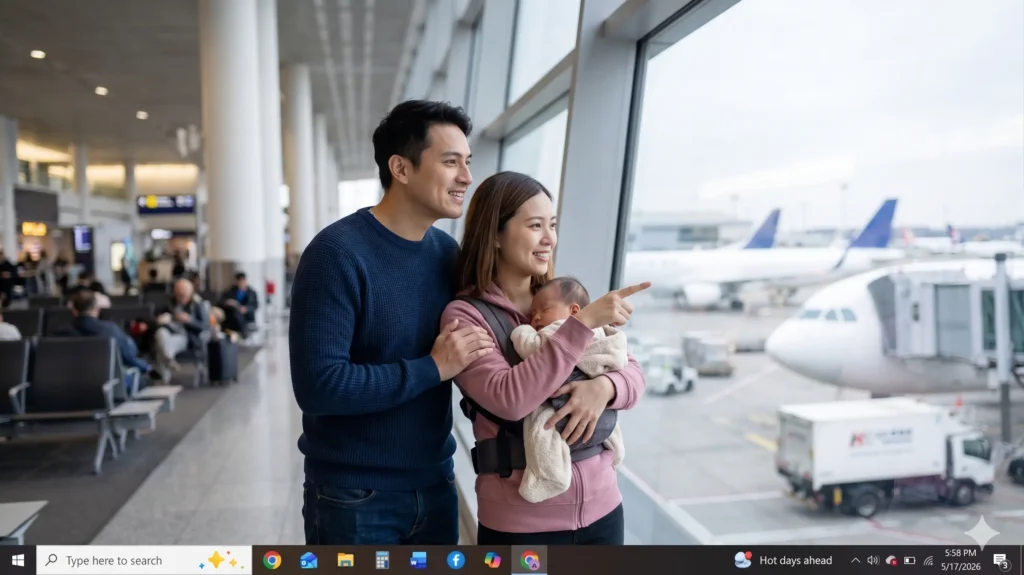
Flying with a newborn for the first time raises more questions than almost any other travel situation. How old does a baby need to be? What documents does an infant require? What happens at security with formula and breast milk?
This guide answers all of it airline age rules, safety, what to pack, how airport security works, and a few things most articles never mention. If you are planning your first flight with a newborn, start here
Is Flying With a Newborn Safe?
Flying with a newborn is generally safe for healthy, full-term babies. Most pediatricians recommend waiting at least 7 days before any air travel, and 4 to 6 weeks for long-haul flights. The main risk is not cabin pressure — it is immune system vulnerability. Newborns in the first weeks of life have limited immunity, and airports expose them to high volumes of people in enclosed spaces.
For premature babies or newborns with heart or lung conditions, a doctor’s clearance is required before flying. The American Academy of Pediatrics advises waiting until the baby is at least 2 to 3 months old when possible, though it confirms that flying with a newborn from 7 days old is generally safe for healthy infants
Which Airlines Allow Newborns to Fly and From What Age?
Every airline sets its own minimum age policy for infants. Most allow flying with a newborn from 2 days old with a medical certificate, but there are real differences between carriers.
| Airline | Minimum Age to Fly | Medical Certificate Required |
|---|---|---|
| Emirates | 2 days | Yes, if under 7 days |
| British Airways | 2 days | Yes, if under 7 days |
| United Airlines | 7 days | Yes |
| Delta Air Lines | 7 days | Recommended |
| Qatar Airways | 2 days | Yes, if under 7 days |
| Air Canada | 7 days | Yes |
| Qantas | 2 days | Yes, if under 7 days |
| Southwest Airlines | 14 days | Yes |
Always confirm your airline’s current policy before booking. Policies update regularly and gate staff enforce them — a baby turned away at check-in due to age is the parent’s responsibility, not the airline’s
Cabin Pressure and Your Newborn’s Ears
This is the concern most parents worry about and one that most travel articles explain incorrectly.
Aircraft cabins are pressurised to roughly the equivalent of 6,000 to 8,000 feet above sea level. For healthy, full-term newborns, this pressure level is not dangerous. The discomfort comes during ascent and descent when pressure changes rapidly and small ears cannot equalise quickly.
Newborns cannot intentionally pop their ears the way adults do. The fix is straightforward: feed during takeoff and landing. Sucking and swallowing activates the same muscles that equalise ear pressure. Breastfeeding, bottle feeding, and a pacifier all work equally well.
Crying, while distressing for parents, also helps equalise pressure, so while it is unpleasant, it is not causing harm.
What Documents a Newborn Needs to Fly
Most parents focus on packing the bag and forget the paperwork. Airlines and border agencies do ask, and being unprepared at the check-in desk causes delays.
Domestic flights:
- No ID required for infants in most countries
- Some airlines ask for proof of age (birth certificate) for babies under a specific age ,confirm when booking
International flights:
- A valid passport is required for infants on almost every international route, including for newborns
- Some countries require a birth certificate even alongside a passport
- If the baby is travelling with only one parent, several countries including Canada, South Africa, and many EU member states require a notarised letter of consent from the absent parent
Apply for the passport early. In the US, UK, Canada, and Australia, infant passport processing typically takes 4 to 6 weeks.
Lap Infant vs. Separate Seat: The Decision Most Parents Get Wrong
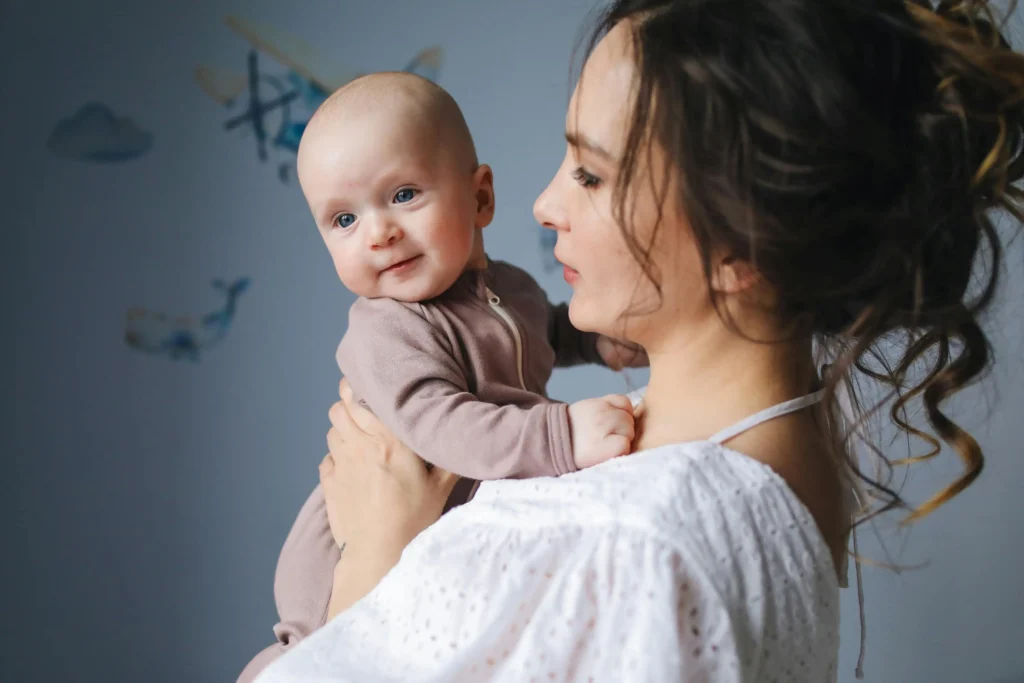
On most airlines, infants under 2 fly free or at a significantly reduced fare as a lap infant no separate seat, held on the parent’s lap. It feels like the obvious choice. It is also the option that the FAA advises against.
The FAA strongly recommends that all infants fly in an approved car seat secured to their own aircraft seat. During turbulence (which cannot always be predicted) the physical forces involved exceed what any adult can resist while holding a child. In the FAA’s own words: “Your arms aren’t capable of holding your in-lap child securely, especially during unexpected turbulence.”
If budget makes a separate seat impractical, ask the gate agent about empty rows. If the flight is not full, agents will sometimes allow a parent to move to a row with a spare middle seat
What to Pack When Flying With a Newborn
Most packing lists for flying with a newborn veer toward the excessive. This is what genuinely matters for the flight itself:
Feeding:
- Formula or expressed milk in carry-on (more on security rules below)
- Nursing cover if preferred for breastfeeding
- 2 to 3 bottles or feeding supplies
- Extra formula measured into individual dry containers for in-flight preparation
Diapering:
- Diapers for double the expected flight time — delays are common
- Travel changing pad (aircraft lavatories have fold-down changing tables, but space is tight)
- Nappy sacks for in-seat disposal if needed
- 2 full spare outfits for the baby
- One spare top for the parent — experienced travellers know why
Comfort:
- Light muslin wrap or blanket — aircraft cabins run cold
- Pacifier with a clip
- White noise app downloaded for offline use — the cabin hum helps, but an app fills in quiet gaps
Documents (accessible outer pocket):
- Passports
- Birth certificate
- Any required medical letters or consent letters
When flying with a newborn on longer routes, understanding how to manage connections matters too. If your journey involves a short stop, the 2-Hour Layover Guide covers exactly what to do and what not to do during a tight connection
How Airport Security Works When Flying With a Newborn
Security with a newborn is straightforward once you know what to expect. The surprises are what slow people down.
Remove the baby from the carrier before the scanner. Baby carriers and wraps must come off the baby and the carrier are screened separately. This catches many first-time parents off guard.
Formula, breast milk, and baby food are exempt from the standard 100ml liquid rule in the US, UK, Canada, and Australia. Declare them at the start of the screening lane and remove them from the bag. They may be swabbed or tested, but cannot be confiscated. Keep them in an easily accessible outer pocket.
The TSA’s official policy confirms that breast milk and formula are treated as medically necessary liquids no quantity limit applies, and ice packs and gel packs used to keep them cool are also permitted. As of November 2025, a new US law (the BABES Act) now legally requires TSA officers to follow proper protocols when screening breast milk and formula a helpful protection for travelling parents.
Strollers and car seats go on the X-ray belt. Fold the stroller before reaching the belt rather than at it. The agent will tag it for gate-check if you are using it to the gate.
Request a family lane if available. Most major international airports have dedicated family security lanes. Staff in these lanes are more experienced with infant-related screening.
For a full walkthrough of international airport procedures, the Airport Guide for First-Time International Flyers covers the entire process step by step.
Breastfeeding on the Plane
Breastfeeding is legally permitted on all commercial flights in the US, UK, Canada, and Australia. No airline can require a nursing parent to cover up or move to a different seat. This is protected under aviation passenger rights in these jurisdictions.
For formula feeding in-flight, pre-measured dry formula in individual containers makes preparation easier. Ask the flight attendant for cooled boiled water most galleys can provide it. Hot water from the kettle needs time to cool, so request it early rather than at feeding time.
Bassinet Seats for Long-Haul Flights
For flights over 5 hours, bassinet seats are worth requesting not at check-in, but at the time of booking.
Bassinets attach to the bulkhead wall at the front of each cabin section. They have weight and height limits typically up to 11kg and 70cm — making them most useful in the first 6 to 9 months. For flying with a newborn on long-haul routes, they are ideal.
Request the bassinet when booking and confirm again 48 hours before departure. Emirates, Qatar Airways, Singapore Airlines, and Air New Zealand are consistently rated among the best carriers for infant facilities on long routes.
Bulkhead seats also offer more floor space useful for laying out a changing pad or settling a restless infant during the flight
The One Thing Most Guides Do Not Cover
Almost every guide on flying with a newborn focuses on packing and timing. Very few address the social reality of a crying baby in a confined cabin.
The honest answer: most passengers are understanding. A small number are not. Neither group is your responsibility to manage.
What experienced parents find works ‘if anything’ is a brief acknowledgment at boarding. A simple “first flight with the baby — fingers crossed” to nearby passengers tends to shift the dynamic from strangers to allies. It is not required. But those who do it consistently report a noticeably different experience.
If the baby cries continuously: feed, walk the aisle, change position, check temperature, try the white noise app. Cabin noise is louder than most people realise crying does not carry as far as it feels like it does from the parent’s seat.
If you are considering flying at unusual hours to avoid crowds, the guide on whether night travel saves money is worth reading before booking
Frequently Asked Questions
What is the youngest age a baby can fly?
Most airlines allow flying with a newborn from 2 days old with a medical certificate, though some set the minimum at 7 or 14 days. Paediatricians generally recommend waiting 4 to 6 weeks for non-emergency travel to reduce the risk of infection during the newborn immune vulnerability period. Always confirm your specific airline’s policy before booking.
Do newborns need a passport to fly?
For international flights, yes — newborns require their own passport on almost every international route, including in the US, UK, Canada, and Australia. For domestic flights, a passport is not required but some airlines ask for proof of age for very young infants. Apply early, as infant passport processing typically takes several weeks.
Can I bring breast milk through airport security?
Yes. Breast milk, formula, and baby food are exempt from the standard 100ml liquid restriction at security in the US, UK, Canada, and Australia. Declare them separately at the screening lane. They may be tested but cannot be confiscated if they are for infant use. Ice packs and cooling accessories are also permitted.
Should I book a separate seat when flying with a newborn?
The FAA recommends booking a separate seat and using an approved infant car seat rather than flying with a newborn as a lap infant. During turbulence, a held infant cannot be secured safely regardless of the parent’s strength. If budget does not allow for an extra seat, ask at the gate about empty seats on less-full flights.
How do I stop my newborn’s ears from hurting on a plane?
Feed during takeoff and landing. Sucking and swallowing activates the muscles that equalise ear pressure breastfeeding, bottle feeding, and a pacifier all work. Crying also helps equalise pressure, so while distressing, it is not causing harm. Avoid flying if the baby has an active ear infection or severe congestion when possible
Conclusion
Flying with a newborn is entirely manageable with the right preparation. The variables that matter most airline age policies, required documents, security procedures, and in-flight feeding all have clear, straightforward answers that make the experience far less stressful than it appears in advance.
Confirm your airline’s infant policy before booking, apply for the passport early, request a bassinet seat on long-haul routes, and pack practically rather than excessively. Most parents who complete their first flight with a newborn find the second one feels almost routine.


