2-Hour Layover Hack: Make the Most of a Short Airport Stop
A 2-hour layover is often dismissed as wasted time — but with the right approach, it can be managed comfortably and even productively. Whether the concern is making a connection on time or simply surviving the wait, the strategies below apply to travelers passing through airports worldwide.
The key is knowing what to do before arriving at the transit airport, not after landing. Preparation is what separates a stressful sprint from a smooth, controlled stop.
At Dreytravel, we’ve seen travelers panic over short layovers, but as experts, we know that 120 minutes is more than enough if you have a plan.
Quick Answer: Is a 2-Hour Layover Enough Time?
Yes — at most major international airports, 2 hours is enough to make your connection comfortably if you stay airside, have no checked bags to re-check, and are not changing terminals. At complex airports like JFK, CDG, or LAX where terminals are separate buildings, 2 hours becomes tight. The single most important variable is whether your arriving and departing flights share the same terminal.
Is a 2-Hour Layover Enough Time to Do Anything Useful?
A 2-hour layover is generally sufficient to clear transit security, freshen up, grab a meal, and reach the departure gate with time to spare — provided the traveler stays inside the airport. In most major international hubs, two hours falls into the “manageable” category when no visa complications or terminal changes are involved.
Can You Leave the Airport During a Short Layover?
Leaving the airport during a 2-hour layover is rarely practical and, in many cases, not advisable. Here is why:
Time loss is significant
Immigration queues, baggage collection (if applicable), transport to the city, and return security screening can consume 90 minutes or more on their own.
Visa requirements apply immediately
Stepping outside the international transit zone means entering the country and that requires a valid entry visa for most nationalities.
Missed connections are not reimbursed easily
If the layover is on a single ticket, the airline may rebook at no cost, but on separate tickets, a missed flight is entirely the traveler’s financial responsibility.
Airside Transit vs. Landside Transit
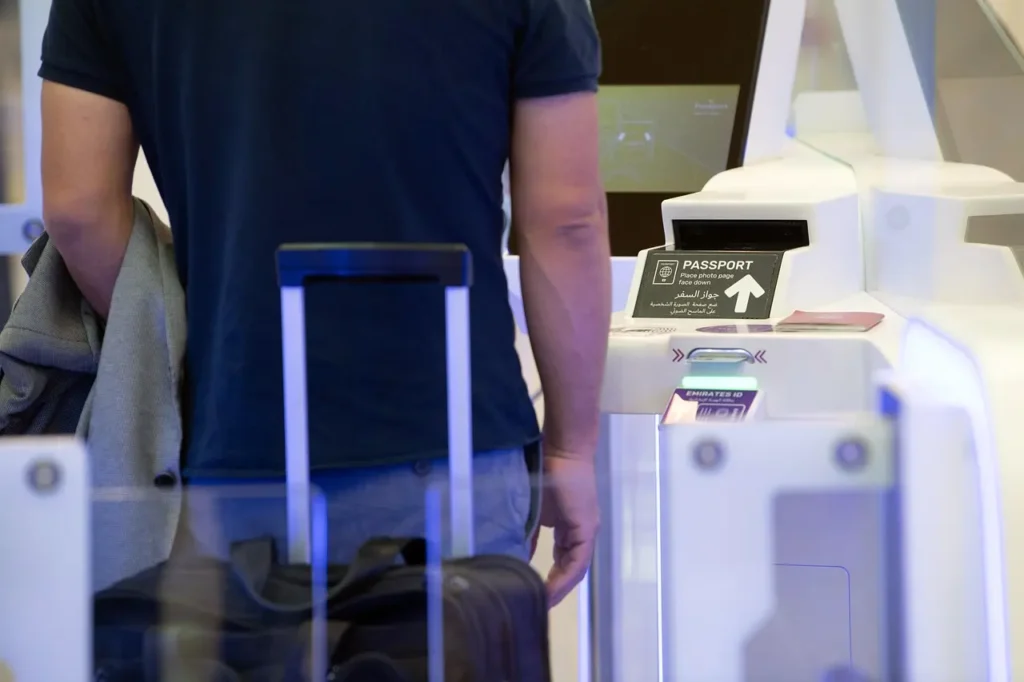
- Airside transit: The traveler remains within the secured international departure area. No visa is typically required for most nationalities at most airports.
- Landside transit: The traveler crosses into the public arrivals area, even without leaving the building. This is treated as entering the country and a visa may be required.
Countries That Require a Transit Visa Even Airside
Some countries require a Direct Airside Transit Visa (DATV) even if the traveler never leaves the departure lounge. The United Kingdom is a well-known example certain passport holders must apply for a DATV before transiting through London Heathrow or Gatwick.
Australia, Canada, and several Schengen-area countries have similar rules depending on the traveler’s nationality.
Always verify visa requirements through the official immigration authority of the transit country before booking.
Transit rules and ticket costs often vary by destination. For instance, while looking for budget options, you might notice price drops on certain routes, such as cheap flights to specific regions like Tehran, which require careful planning regarding transit times.
Transit Visa Rules for Short Layovers — What Travelers Often Miss
This is one of the most overlooked aspects of short layovers. Many travelers assume that staying airside (inside the secure transit zone) exempts them from visa requirements. That is usually true but not always.
Airside Transit vs. Landside Transit
Airside transit: The traveler remains within the secured international departure area. No visa is typically required for most nationalities at most airports.
Landside transit: The traveler crosses into the public arrivals area, even without leaving the building. This is treated as entering the country and a visa may be required.
Countries That Require a Transit Visa Even Airside
Some countries require a Direct Airside Transit Visa (DATV) even if the traveler never leaves the departure lounge. The United Kingdom is a well-known example certain passport holders must apply for a DATV before transiting through London Heathrow or Gatwick.
Australia, Canada, and several Schengen-area countries have similar rules depending on the traveler’s nationality.
Always verify visa requirements through the official immigration authority of the transit country before booking.
Transit rules and ticket costs often vary by destination. For instance, while looking for budget options, you might notice price drops on certain routes, such as cheap flights to specific regions like Tehran, which require careful planning regarding transit times.
Single Ticket vs. Separate Tickets: The Most Overlooked 2-Hour Layover Factor
Whether your two flights are on one booking or two separate tickets changes everything about how a 2-hour layover works — and most travelers don’t realize this until something goes wrong.
On a single ticket or codeshare booking: the airline is legally responsible for your connection. If your inbound flight is delayed and you miss the connection, they rebook you at no cost. Your checked bags transfer automatically in most cases. A 2-hour window here is comfortable at most airports.
On separate tickets: you are entirely on your own. A 20-minute inbound delay that causes you to miss the second flight means buying a new ticket out of pocket. Your bags do not transfer — you must collect them, re-check them, and clear security again, which can consume 45–60 minutes of your 2-hour window on its own at most international airports.
The practical rule: if you booked two flights independently to save money, your 2-hour layover is effectively a tight 60–75 minute connection once you factor in bag handling and re-screening. In this case, treat 2 hours as a minimum — not a comfortable buffer — and consider upgrading to a 3-hour gap wherever possible.
This single-ticket vs. separate-ticket distinction is what separates a relaxed tight connection from a genuinely risky one.
Best Cities for a Quick Airport Transit
Not all airports are created equal. Some are designed for smooth, efficient transit. Others are sprawling, confusing, and understaffed at security checkpoints.
Airports Where a 2-Hour Layover Works Well
| Airport | City | Why It Works |
| Singapore Changi (SIN) | Singapore | Compact terminals, fast connections, free transit tours |
| Dubai International (DXB) | Dubai, UAE | Efficient airside movement, multiple terminals connected |
| Amsterdam Schiphol (AMS) | Netherlands | Single-terminal design, fast security, clear signage |
| Tokyo Narita (NRT) | Japan | Orderly queues, reliable timing, multiple transit lounges |
| Doha Hamad (DOHA) | Qatar | Modern layout, wide airside dining, fast gate access |
| London Heathrow T5 (LHR) | United Kingdom | Best for within-terminal connections; inter-terminal takes longer |
Airports Where a 2-Hour Layover Requires Caution
| Airport | City | Common Issue |
| JFK International | New York, USA | Multiple separate terminals; inter-terminal requires exit and re-entry |
| Los Angeles LAX | Los Angeles, USA | Congestion, scattered terminals, slow security |
| Charles de Gaulle (CDG) | Paris, France | Large campus, multiple terminals, long walking distances |
| Mumbai CSIA (BOM) | India | Separate domestic and international terminals |
How to Maximize a Short Layover: A Practical Step-by-Step Guide
Before the Flight
- Confirm terminal information. Arriving and departing from the same terminal saves 20–40 minutes.
- Pre-download the airport map. Most major airports publish terminal maps on their websites.
- Check in online for the connecting flight if it is on the same booking. This avoids queuing at check-in desks.
- Pack a carry-on only when possible. Checked luggage during a short layover adds risk and time.
Upon Landing
- Walk at a steady pace directly toward the connecting gate. Do not stop until the gate location is confirmed.
- Use priority security lanes if eligible. Many airports offer fast-track security for business class passengers or lounge members.
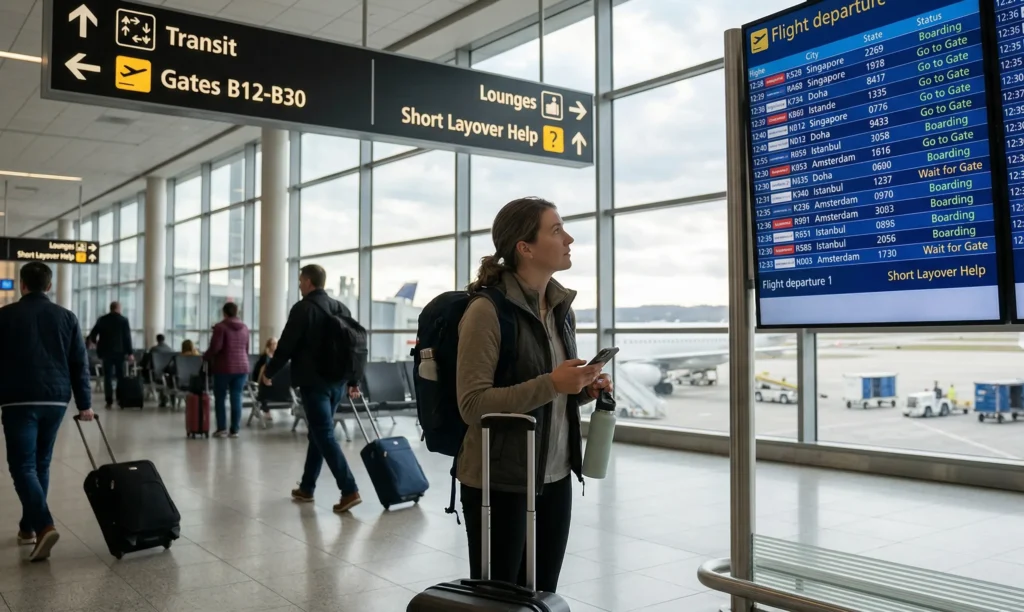
- Check the departure board as soon as one is visible. Gate changes happen frequently.
The 20-Minute Rule
A practical internal benchmark used by experienced transit travelers: if the connecting gate is more than a 20-minute walk away and security screening is required, treat the layover as tight and skip any non-essential stops.
When booking your connecting flights, remember that timing affects both your connection and your wallet; understanding why flight prices change every day can help you secure the best deal for your layover route.
Airport Luggage Lockers: A Useful Option for Longer Waits
For layovers that fall between 2 and 4 hours, airport luggage lockers can be genuinely useful particularly for travelers who want to move freely without carrying a heavy bag.
Most major international airports offer short-term luggage storage, either through automated locker systems or staffed storage counters. Costs vary, but typically range from $5 to $15 USD per item for a few hours.
Key airports with reliable luggage storage:
- Singapore Changi — automated lockers in all terminals
- Amsterdam Schiphol — staffed storage near arrivals
- Dubai DXB — multiple storage points airside and landside
- Tokyo Narita — coin-operated lockers throughout the terminal
Luggage storage is most useful when there is time to use the freedom it provides. On a strict 2-hour layover, it is only worth considering if the bag is heavy and the gate is nearby.
The Information Gain Section: What Most Layover Guides Don’t Tell You
Most layover articles focus on whether to leave the airport. Fewer explain the internal decisions that actually determine whether a 2-hour stop is comfortable or chaotic.
The Gate Proximity Factor
Airlines do not guarantee connecting gate assignments are nearby. On a single itinerary, the airline bears responsibility for the connection but the gate could still be in a different concourse. On separate tickets, there is no coordination at all.
Practical tip: After booking, use the airline’s app or seat map tool to identify which terminal and concourse the departing flight uses. Cross-reference with the arrival terminal. If they differ, contact the airline or check the airport’s terminal guide.
The “Minimum Connecting Time” Database
Airports publish official Minimum Connecting Times (MCTs) the shortest interval the airport considers feasible for a connection. These are used by airlines when building itineraries.
For example:
- Amsterdam Schiphol: 40 minutes (same terminal, international-to-international)
- London Heathrow T5: 60 minutes (within terminal)
- JFK: 90–120 minutes (different terminals)
A 2-hour layover exceeds most MCTs, which is reassuring but MCTs assume no delays on the inbound flight. Building in mental buffer for a 15–20 minute delay on arrival is a sensible habit.
Transit Passenger Priority Boarding
Some airlines offer priority boarding to transit passengers with tight connections. This is not widely advertised but can be requested at the gate of the inbound flight before landing. Cabin crew will sometimes notify gate staff at the connecting terminal.
This small action can recover 10–15 minutes at the point of disembarkation.
For travelers planning their full itinerary around connection times, understanding how ticket types affect flexibility is essential.
Visa requirements for transit are closely tied to passport type and destination country.
Frequently Asked Questions
Is 2 hours enough time for a layover?
Two hours is generally considered sufficient for an international layover at a well-organized airport, provided the traveler stays airside, has no checked luggage to re-check, and is not required to clear customs. At larger or less efficient airports, two hours can feel tight if terminal changes are involved.
Can I leave the airport during a 2-hour layover?
Leaving the airport during a 2-hour layover is not recommended for most travelers. The time required to clear immigration, travel to a destination, and return through security typically exceeds what is available. In select cities with very fast transit links, it may be feasible but it carries a significant risk of missing the connecting flight.
Do I need a transit visa for a short layover?
In most cases, travelers who remain in the international airside transit zone do not require a visa. However, some countries including the United Kingdom require a Direct Airside Transit Visa (DATV) for certain nationalities even without leaving the departure lounge. Requirements should always be verified through the official immigration authority before travel.
What is the best airport for a short layover?
Singapore Changi, Amsterdam Schiphol, and Doha Hamad International are consistently regarded as the most transit-friendly airports globally. All three feature compact or well-connected layouts, reliable security processes, and clear wayfinding making 2-hour connections manageable for most travelers.
What should I do first when I land during a short layover?
Upon landing, the priority is locating the departure gate for the connecting flight. Check the departure board or airport app immediately. Walk directly toward the gate, clearing any required security checks along the way. Once the gate is confirmed and time permits, other stops food, restrooms, shops can be considered.
For those with overnight stays, our guide on traveling at night will help you decide if it’s better to sleep in a pod or explore the city.
Conclusion
A 2-hour layover, handled with preparation, is a workable transit window at the majority of major international airports. The most important variables terminal layout, visa status, ticket type, and gate proximity are all factors that can be researched and accounted for before the journey begins.
Travelers who understand how connecting times work, check their transit visa obligations in advance, and keep their movement efficient will find that two hours is more than enough to connect comfortably and occasionally, even enjoy the pause.