

This article contains affiliate links. We may earn a commission at no extra cost to you.
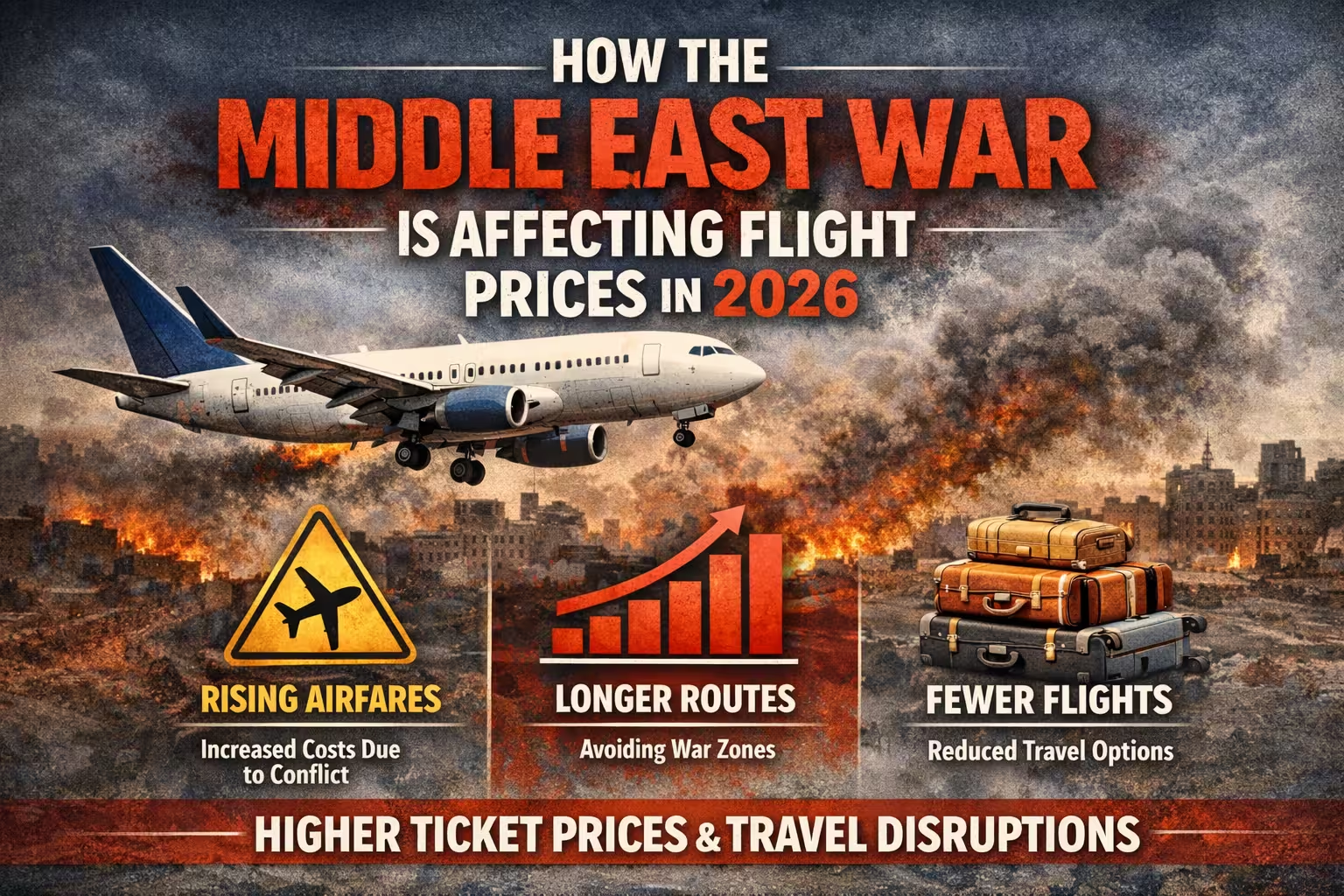
Flight prices were already hard to predict. Then on February 28, 2026, the United States and Israel launched military strikes on Iran — and the global aviation system was thrown into its biggest crisis since the COVID-19 pandemic. If you have a flight booked through the Middle East, or you’re planning to travel in the coming weeks, here is everything you need to know about what is happening, why prices are rising, and what you should do right now.
Will Flight Prices Go Up Because of Iran?
Yes. Flight prices are already rising on routes affected by the Iran conflict, and further increases are likely if the situation continues. Airspace closures across 8 countries have forced airlines to reroute flights, adding fuel costs. Oil market disruption through the Strait of Hormuz is pushing crude prices higher, which directly increases jet fuel costs globally. Travelers booking Middle East routes or connecting through Dubai, Doha, or Abu Dhabi should expect higher fares for at least the next 4 to 6 weeks.
What Happened: The Crisis That Grounded Thousands of Flights
On February 28, 2026, the US and Israel launched strikes on Iran in what has been called “Operation Epic Fury.” Iran retaliated almost immediately, launching ballistic missile strikes on Gulf nations hosting US military bases — including the UAE, Qatar, Bahrain, and Kuwait.
The result was instant aviation chaos. Iran, Iraq, Israel, Syria, Kuwait, Qatar, and the UAE all announced at least partial closures of their airspace within hours. Dubai International Airport — the world’s busiest airport for international traffic — was directly hit. Four people were injured at Dubai International, and one person was killed at Abu Dhabi’s Zayed International Airport in a drone strike. Kuwait International Airport was also struck.
By Sunday March 1, the disruption had grown into the biggest crisis global air travel has seen since COVID — with thousands of flights cancelled and hundreds of thousands of passengers stranded worldwide.
The Hidden Cost Nobody Is Talking About: The $7,500 Per Hour Problem
Most blogs are covering flight cancellations. Almost none are covering what this crisis actually costs per flight — and why that number matters directly to your wallet.
Here is the number that should concern every traveler: $6,000 to $7,500.
That is the additional operating cost per flight hour when a widebody aircraft is forced to reroute around closed airspace, according to Ernest Arvai, aviation analyst at US-based AirInsight. It is not a total cost — it is per hour, per flight.
Now consider what this means in practice. A flight from London to Singapore that previously flew straight over Iran and the Gulf in roughly 13 hours now has to reroute south over Saudi Arabia or north through China’s mountainous Hotan waypoint corridor. That adds 2 to 3 hours of flight time minimum.
Do the math:
- 2.5 extra hours × $7,500 per hour = $18,750 additional cost per flight
- A widebody aircraft carries roughly 300 passengers
- That works out to approximately $62 in hidden rerouting cost per passenger per flight

The Numbers: How Bad Is the Disruption?
The scale of this crisis is staggering:
- 3,000+ flights cancelled since the conflict began, according to aviation analytics firm Cirium
- 19,000+ flights delayed across the region
- 90,000 passengers per day normally transit through Emirates, Qatar Airways, and Etihad hubs alone — all now severely disrupted
- At least 145 planes that were already in the air were diverted mid-flight to Athens, Istanbul, Rome, and other cities
- One American Airlines flight from Philadelphia to Doha spent nearly 15 hours in the air before turning around and returning to its departure city
- Passengers were stranded as far away as Australia, Brazil, Indonesia, and the Maldives
Emirates cancelled 38% of its flights on Saturday. Qatar Airways cancelled 41%. Etihad cancelled 30%. These are not minor disruptions — this is a near-total shutdown of the world’s most important aviation hub region.
Why This Is Sending Flight Prices Higher
1. Airspace Closures Force Longer Routes
When airlines can no longer fly over Iran, Iraq, Israel, Jordan, and the UAE, they have to find alternative flight paths. Most are now routing flights south over Saudi Arabia to avoid conflict zones.
This adds hours to flight times between Europe and Asia — routes that previously flew over the Gulf in 6–7 hours may now take 9–11 hours. Longer flights burn significantly more fuel, and that cost gets passed directly to passengers through higher ticket prices.
2. Fuel Costs Are Spiking
The Middle East sits above roughly 48% of the world’s proven oil reserves. The Strait of Hormuz — through which about 20% of global oil trade passes — is now under direct threat. Multiple tanker operators have already suspended shipments through the waterway.
When oil supply faces disruption, prices rise fast. Higher crude oil prices mean higher jet fuel costs for airlines. Those costs flow through to ticket prices, typically within days to weeks of a sustained price increase.
3. Hub Collapse Is Creating Alternative Route Demand
Dubai, Doha, and Abu Dhabi function as the world’s most important transit hubs, connecting Europe with Asia, Africa, and Australia. With these hubs shut down, millions of passengers who would normally connect through them are now scrambling for direct flights or alternative routes.
Demand on routes that bypass the Middle East — such as direct Europe to India or direct US to Southeast Asia — has surged dramatically. When demand spikes suddenly on limited alternative capacity, prices go up fast. Reports from India already show economy tickets on Air India from Delhi to London exceeding 150,000 rupees on some searches.
4. Airlines Are Absorbing Massive Operational Losses
Aircraft and crews are stranded in wrong locations around the world. Emirates alone had over a dozen crew members stuck in Doha as of Saturday. Repositioning aircraft, accommodating stranded passengers, issuing refunds, and rerouting operations all cost money. Airlines will need to recover these losses through future pricing.
5. Insurance and Risk Premiums
When conflict zones expand, aviation insurers raise premiums for flights operating near those areas. Airlines flying routes adjacent to the conflict — including routes over Saudi Arabia that are now carrying diverted traffic — face higher insurance costs that feed into fare calculations.

Which Airlines Are Affected and Until When
Here is a summary of current suspensions as of March 4, 2026:
| Airline | Routes Suspended | Until |
|---|---|---|
| Emirates | All Dubai flights | March 4 (monitoring) |
| Qatar Airways | All Doha flights | March 4 (monitoring) |
| Etihad | All Abu Dhabi flights | March 4 (monitoring) |
| British Airways | Tel Aviv, Bahrain | March 4 |
| Lufthansa Group | Tel Aviv, Beirut, Amman, Erbil, Tehran | March 7 |
| Wizz Air | Israel, Dubai, Abu Dhabi, Amman | March 7 |
| Turkish Airlines | Lebanon, Syria, Iraq, Iran, Jordan, Qatar, Kuwait, UAE, Oman | March 2+ |
| Air France | Dubai, Riyadh, Beirut, Tel Aviv | Ongoing monitoring |
| United Airlines | Tel Aviv | March 6 |
| Delta Air Lines | Tel Aviv | At least March 4 |
| Air India | All Middle East destinations | March 4 |
This list is changing rapidly. Check directly with your airline before traveling.
What Travelers Should Do Right Now
If You Have a Flight Booked Through the Middle East
Check your airline’s rebooking policy immediately. Most major carriers are offering free date changes or full refunds for affected routes. British Airways, Emirates, Wizz Air, and Lufthansa Group have all announced flexible rebooking options.
Do not wait. Rescheduling options are filling up fast as hundreds of thousands of passengers compete for alternative seats on the same limited routes.
If You Are Currently Stranded
Contact your airline directly — expect long wait times as call centers are overwhelmed. Meanwhile, register with your country’s embassy or consulate in the country where you are stranded, as some governments are organizing repatriation assistance.
Book accommodation now if you haven’t already. Hotels near major diversion airports (Athens, Istanbul, Rome, Mumbai) are filling up with stranded passengers.
If You Are Planning Future Travel to or Through the Region
Hold off on booking Middle East routes for at least 2–3 weeks until the situation stabilizes. If you must travel, avoid connecting through Dubai, Doha, or Abu Dhabi and look for direct routing options instead.
Search for alternative flight routes and compare current prices →
If Your Travel Insurance Doesn’t Cover This
Standard travel insurance policies generally do not cover events that have already begun — meaning if you buy coverage now for an existing conflict, it likely won’t apply. Review your existing policy carefully and contact your insurer directly to understand your options.
How Long Will This Last? What Experts Are Saying
Aviation analysts are cautious about predictions. Henry Harteveldt, airline industry analyst and president of Atmosphere Research Group, put it bluntly: “For travelers, there’s no way to sugarcoat this. You should prepare for delays or cancellations for the next few days as these attacks evolve and hopefully end.”
The situation remains extremely fluid. Israel and Iran exchanged new attacks on Sunday March 1, with Iran striking Dubai International Airport and Kuwait’s main airport in its retaliatory strikes. There is no clear timeline for when airspace will reopen or when normal operations will resume.
Historical precedents give some guidance. When Russia closed airspace in 2022 due to the Ukraine invasion, airlines adapted within weeks — rerouting around Russian airspace and adjusting fares. A similar adjustment period is likely here, though the scale of disruption is significantly larger given the centrality of Gulf hubs to global aviation.
How to Find Flights That Avoid the Conflict Zone
Despite the chaos, travel is still possible — you just need to route around the affected region. Here are the best strategies right now:
Look for direct flights. Avoid any itinerary that connects through Dubai, Doha, or Abu Dhabi. Direct flights between your origin and destination, even if more expensive, are far more reliable right now.
Consider alternative hubs. Istanbul, Cairo, Casablanca, and Nairobi are handling increased transit traffic and offer connections that bypass the conflict zone.
Be flexible on dates. The situation could resolve faster than expected, or it could worsen. Building flexibility into your travel dates gives you options if conditions change.
Set price alerts. Once the situation stabilizes, prices on alternative routes will likely drop as the immediate demand surge eases. Setting alerts lets you catch that correction automatically.
Compare available flights on your route right now →
The Bigger Picture: War, Oil, and the Future of Flight Prices
This crisis is a real-time demonstration of how deeply connected geopolitics and aviation are. The Middle East is not just a travel destination — it is the backbone of global aviation connectivity and sits above the world’s most critical energy supply chains.
If this conflict continues for weeks rather than days, the effects will extend far beyond the immediate cancellations:
- Oil prices above $100 per barrel would translate to industry-wide fare increases across all routes globally, not just Middle Eastern ones
- Insurance premium increases will persist for months after any ceasefire as underwriters reprice risk
- Airline financial losses from stranded aircraft and passenger compensation will pressure profit margins, potentially leading to route cuts and capacity reductions
- Traveler confidence in Middle East routing could remain suppressed for months, shifting demand patterns across global aviation permanently
For now, the most practical advice is simple: stay informed, be flexible, and if you need to book travel, use the tools available to find routes that keep you away from the conflict zone.
[Find safe, reliable flights for your upcoming trip →] (Insert your Travelpayout affiliate link here)
Frequently Asked Questions
Yes. Emirates suspended all flights to and from Dubai until at least March 4, with ongoing monitoring. Check directly with your airline for the latest updates as the situation changes hourly.
Standard travel insurance policies generally do not cover events that were already underway when you purchased the policy. Review your existing policy and contact your insurer directly.
Prices on alternative routes bypassing the Middle East have already surged significantly. Reports from India show some Europe-bound fares more than doubling. The longer the conflict continues, the broader the price increases will spread across global routes.
Saudi Arabia’s airspace remains open and is being used as an alternative corridor. Some routes through Turkey, Egypt, and East Africa remain operational. Always check government travel advisories and airline websites before booking.
Emirates indicated a potential resumption from March 4 afternoon UAE time, but this depends entirely on the security situation. Qatar Airways and Etihad are monitoring closely. No firm timeline exists as of March 4, 2026.
Contact your airline immediately to explore rebooking options. Most major carriers are currently offering free changes or refunds on affected routes. Don’t wait — alternative seats are filling fast.
Conclusion
The Middle East conflict that began on February 28, 2026 has created the most significant global aviation disruption since the COVID-19 pandemic. With major hubs in Dubai, Doha, and Abu Dhabi shut down, over 3,000 flights cancelled, and fuel costs rising on the back of oil market uncertainty, flight prices are under significant upward pressure — and the situation is still evolving.
For travelers, the priority right now is information and flexibility. Check your airline, understand your rights, and if you need to book travel in the coming weeks, choose routes that bypass the conflict zone entirely.
We will continue updating this article as the situation develops.
Search and compare flights on safe routes right now →
Last updated: March 3, 2026. Information in this article is based on reports from Cirium, FlightRadar24, major airline announcements, and news sources including AP, Fortune, PBS NewsHour, and Euronews. The situation remains fluid — always check directly with your airline and government travel advisories before traveling.
Follow our blog for more!


1 Comment
[…] See how the Middle East conflict is affecting prices right now […]